Central Florida gets hit two ways. There is hurricane season, which everybody plans for, and there is the ordinary summer afternoon, which nobody does — this part of the state sees more lightning and more convective storm activity than anywhere else in the country, and a single cell can put a tree through a roof or drop three inches of rain on a yard that has nowhere to send it. Our crews tarp and board up first so the building stops taking on water, then deal with what already got in.
- Emergency roof tarping and board-up, day or night
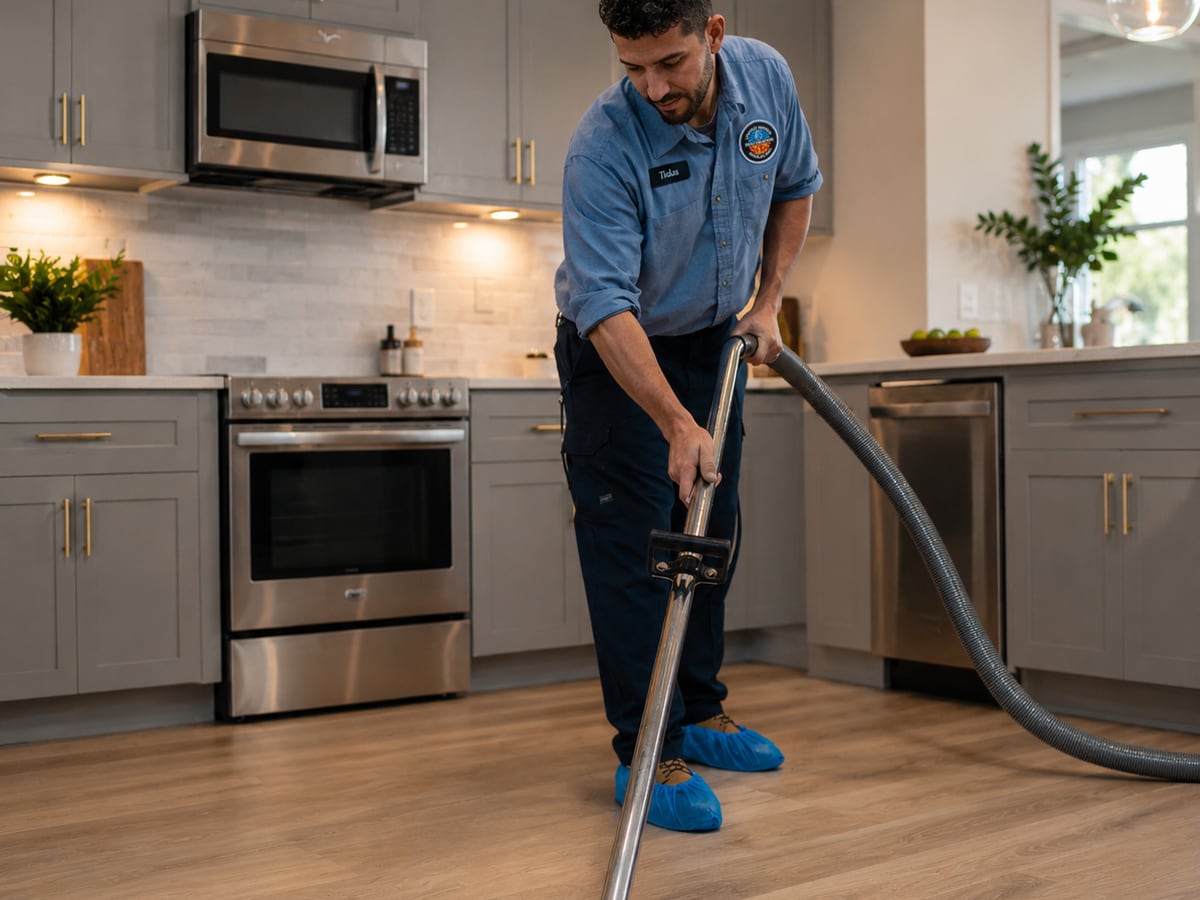
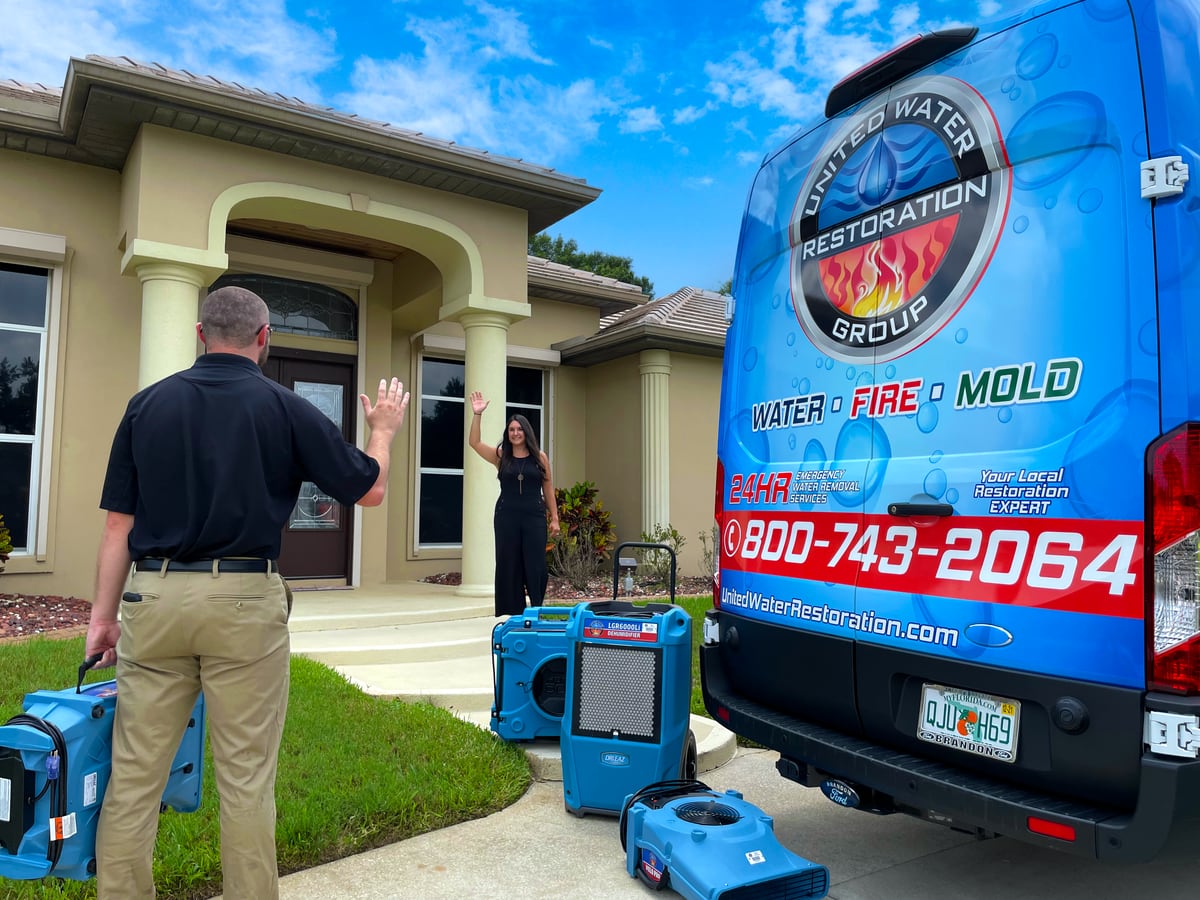
- Water removal, drying and dehumidification
- Debris and fallen-tree removal from the structure
- Assessment of what the wind actually damaged, not just what is visible from the ground
- Documentation built for a storm claim, including date-stamped photographs
- Full reconstruction — roof deck, sheathing, drywall, flooring and finishes
Wind-Driven Rain Is Not the Same as a Leak
A roof and a window assembly that keep out a normal storm can both fail under sustained wind that pushes water horizontally. Water gets under shingle courses, past weep holes, around the perimeter sealant on a slider, and into the wall from the outside — and it does it in volume, for hours, while nobody can safely be outside looking at it.
That is why the inspection after a storm is not just a look at the ceiling stain. We check the cavity behind the affected wall, the insulation, the underside of the roof deck and the soffit line, because the water that came in during the storm has spent the rest of the day moving somewhere else.
The Order Things Have to Happen In
After a named storm everybody in the county calls their carrier at once and adjusters are stretched thin. Drying cannot wait for that queue: in this climate a wet house in August grows mold long before an adjuster is free. So the sequence is stabilize, document, then dry — and the documentation is what protects you for doing the right thing early.
Photograph everything before anything moves, including the exterior and the debris. Keep damaged materials we remove where practical, or at least photographed in place. Emergency mitigation is a covered category on most policies precisely because carriers would rather pay for tarping than for the mold claim that follows not tarping.
When the Power Is Out for Days
Losing air conditioning for a week in a Florida summer is its own damage event. Indoor humidity climbs into the seventies, condensation forms on cool interior surfaces, and contents that came through the storm dry start growing mold in a sealed house. If you have a generator, running the air handler is often a better use of it than running the refrigerator.
Our crews carry generators and desiccant equipment for exactly this, so drying can start on a property that has no service yet. Where a whole street is out, we prioritize buildings that are actually wet over buildings that are merely hot — and we will tell you honestly where you sit in that order.