A house fire does its worst damage after the flames are out. Soot is acidic and it keeps eating metal, grout and finishes for as long as it sits there, and in the Central Florida climate the water the fire department used starts growing mold in a shut-up house within days. So the work runs in a set order: make the building safe and weather-tight, get the water out, stabilize the soot before it etches anything else, then start cleaning. We carry that through the rebuild rather than handing you off to somebody else.
- Emergency board-up and roof tarping so the building stops taking on weather
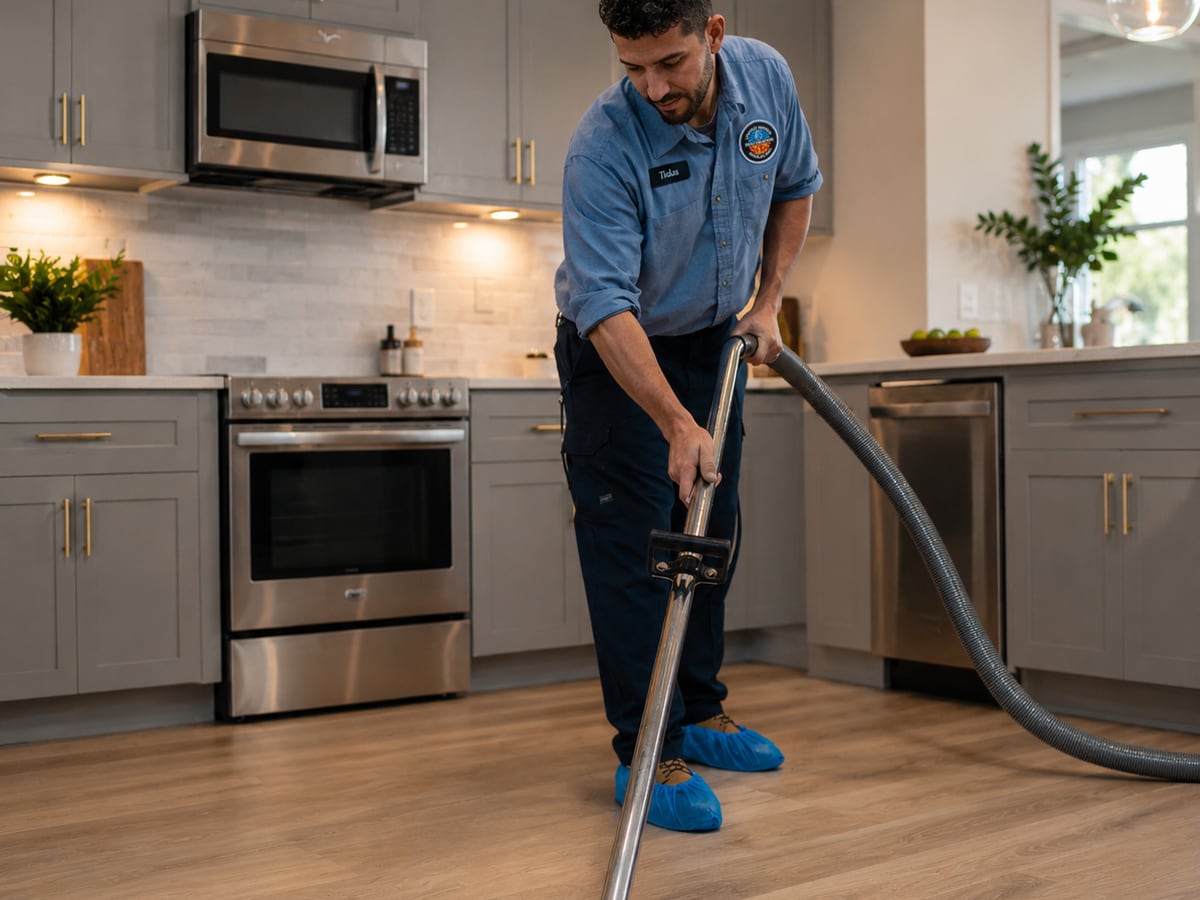
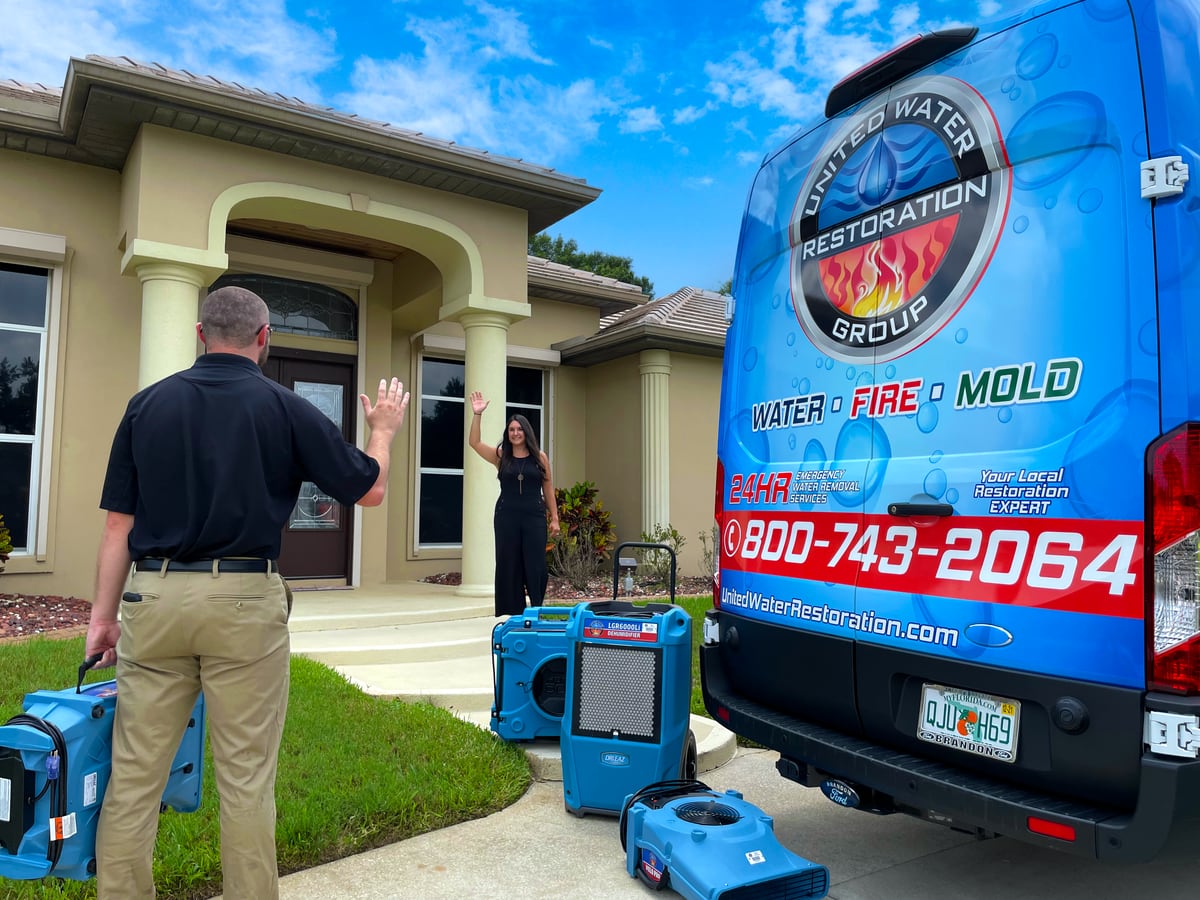
- Water removal and drying from the firefighting effort
- Soot and smoke residue cleaning, surface by surface
- Odor removal — cleaning first, then treatment, never fragrance over the top
- Contents inventory, pack-out and cleaning off site
- Reconstruction by our own crews, start to finish
Soot Is Not Dust
Different fires leave different residues and they need different methods. A slow, smoldering fire leaves a sticky, oily film that smears if you wipe it wrong. A fast, hot fire leaves a dry powder that lifts cleanly if you get to it before somebody rubs it into the paint. Protein fires — a pan of food left on a burner — leave almost nothing visible and a smell that will not leave a kitchen alone.
This is why the first hour on site is spent testing rather than cleaning. The wrong sponge on the wrong residue turns a cleanable wall into a repaint, and there is no undoing it. It is also why we ask you not to start wiping things down before we get there, however strong the urge is.
Odor, Honestly
Smoke odor is not a smell sitting on top of a surface, it is smoke particulate that went everywhere air went — inside wall cavities, into the duct work, through porous materials. Anything that masks it is buying you a week. The only thing that actually works is removing the source: cleaning every affected surface, cleaning or replacing the ducts, sealing what cannot be cleaned, and treating the air afterwards.
Some things will not come back, and we would rather tell you that on day one. Heavily smoke-damaged upholstery, mattresses and some insulation are usually a replacement line on the claim, not a cleaning line. Saying so early is what keeps the estimate honest.
Your Belongings Leave Before the Rebuild Starts
Contents get inventoried item by item and photographed, then the salvageable ones go out to be cleaned somewhere the dust from demolition cannot reach them. That inventory is also what your carrier needs in order to settle the personal-property side of the claim, and it is far easier to build while everything is still in the house than from memory three weeks later.
Documents, photographs and anything irreplaceable get flagged first and handled separately. Keep every receipt for what you buy while you are displaced — additional living expense is a real part of most policies and people routinely leave it on the table.