A sewage backup is not a bad water loss, it is a different job with different rules. Under the restoration standard it is Category 3 — grossly contaminated — and that changes what can be saved, what protective equipment the crew wears, and how the space has to be isolated from the rest of the building. In Central Florida we deal with both sides of it: municipal lines that back up under a heavy rain, and the septic systems that serve most rural parcels out here.
- Category 3 protocols — containment, protective equipment and controlled removal
- Emergency extraction of standing water, clean or contaminated
- Removal and disposal of porous materials that absorbed contaminated water
- Cleaning and disinfection of every surface that stays
- Structural drying and odor treatment afterwards
- Rebuild of flooring, drywall and cabinetry by our own crews
What Has To Go, and Why
Porous materials that took on Category 3 water do not get cleaned, they get removed. Carpet and pad, particleboard cabinet boxes, the bottom of the drywall, insulation in the affected cavity — all of it leaves the building. Semi-porous materials such as framing and subfloor can usually be cleaned and dried once the contamination is gone. Hard surfaces are cleaned and disinfected.
People sometimes ask us to dry it out and save the carpet. We will not, and it is not an upsell — the standard exists because the contamination is biological and it comes back. What we will do is show you exactly where the removal line is and why it stops there rather than taking half the house with it.
Septic Systems and Rural Parcels
A large part of this territory is on septic rather than sewer, and septic failures look different. Instead of one dramatic backup you get slow drains everywhere, a soft wet patch over the drain field, and smell. After several days of rain a drain field can simply have nowhere left to send anything, which is a saturation problem rather than a blockage.
We are not septic contractors and we do not pump tanks, but we do the part that comes after: getting the contaminated water out of the building, removing what it ruined, and drying and disinfecting the structure. When the pattern points at the system rather than the plumbing, we say so, because cleaning up an overflow that is going to happen again next week helps nobody.
Extraction on Its Own
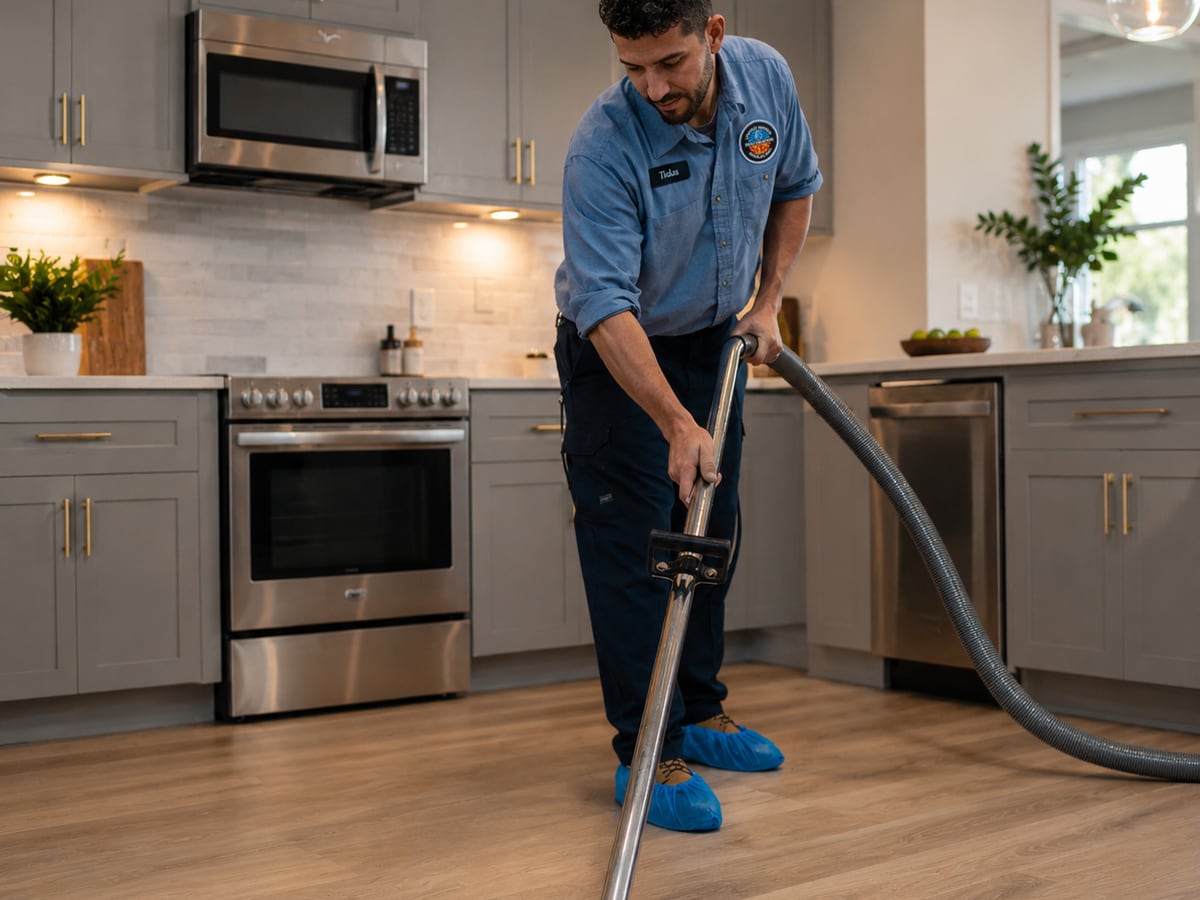
Not every call needs the full Category 3 treatment. Sometimes there is simply a lot of clean water on the floor and it needs to be off the floor now — a burst supply line, a failed water heater, a fish tank, a fire sprinkler that discharged. Volume alone is a reason to call: a household wet vacuum moves a few gallons, and a truck-mounted or portable extractor moves hundreds.
Getting the standing water out fast is what decides whether the flooring survives. Every hour it sits, more of it goes into the subfloor, the bottom plate and the contents, and the job quietly changes from an extraction into a demolition.